From video to
robot intelligence.
We develop AI software for physical AI, built on two cores: training data generated from video, and safety prediction with a world model.
The bottleneck is training data.
Teaching a robot a new task requires a large amount of training data. Preparing it takes months and costs on the scale of tens of millions of yen, which makes it the biggest bottleneck in robot deployment.
Cost and time
Every site and task needs a dedicated team and heavy GPU spending to build the data.
Mocap does not scale
A dedicated suit, a studio, one person per session. It cannot keep up with the number of sites.
The Sim2Real gap
It works in simulation, then breaks on the real robot because of real-world variation.
HCS Anchor
Turn video into training data that runs on real robots.
Reconstructs both the person and the scene in 3D, then retargets to your robot. The output is checked against physical constraints and goes straight into RL / IL.
Input
- Site cameras and work logs
- Phone footage and public video
- Dashcam, warehouse, factory logs
HCS Anchor
- ①Separate people, objects, scene
- ②Reconstruct 3D pose
- ③Extract contacts and timing
- ④Retarget to the robot
- ⑤Score feasibility
Output
- Joint trajectories, contacts, scene
- Physically validated
- Straight into RL / IL
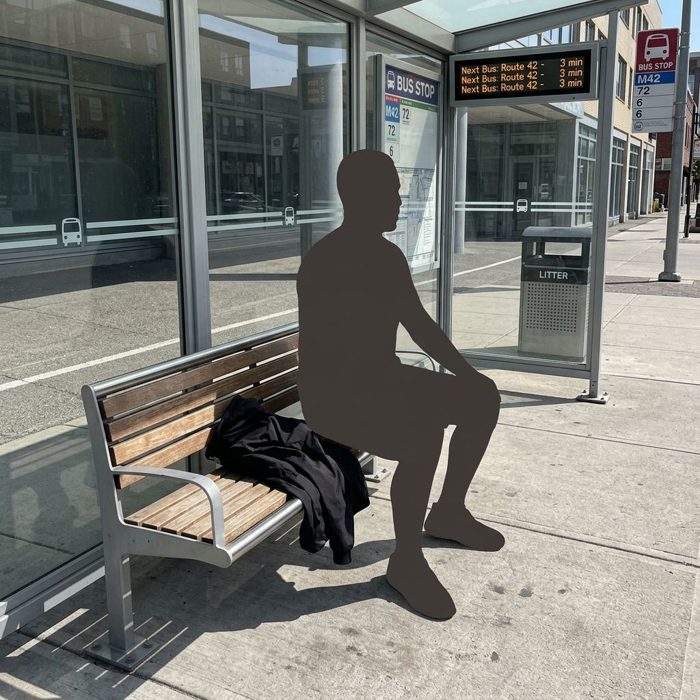 01Segment
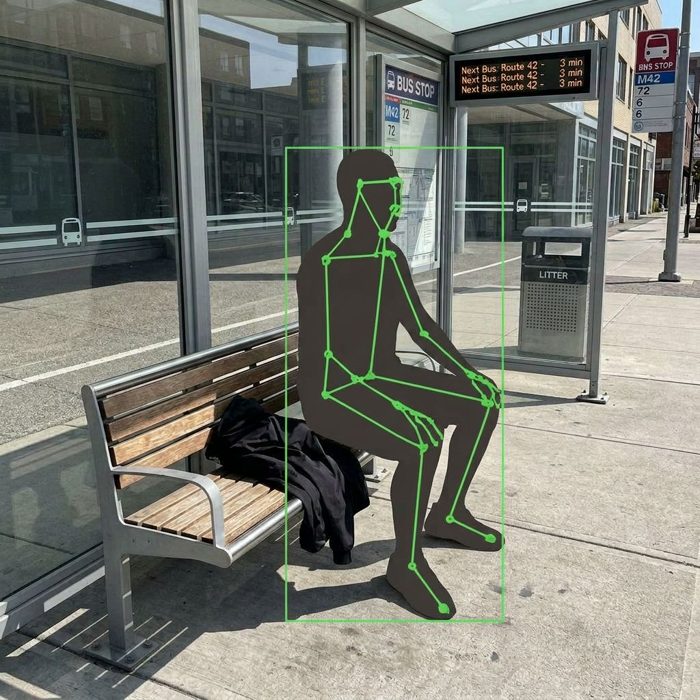 023D pose
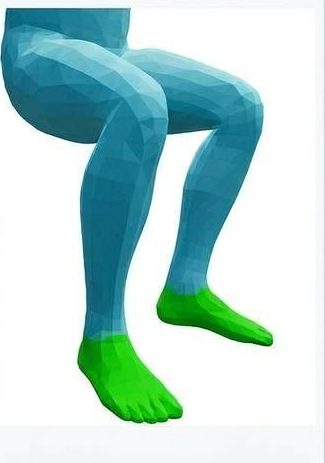 03Contact
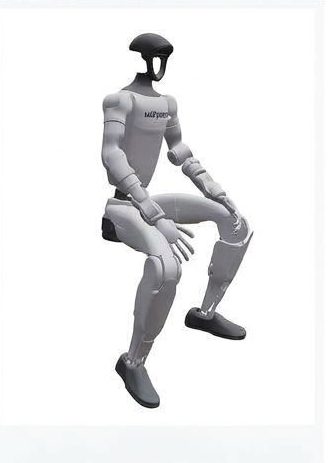 04Retarget
Actual output from a single handheld clip (Unitree G1)
Accuracy, proven on a public benchmark.
SLOPER4D (a public CVPR dataset) is to motion estimation what ImageNet is to image recognition and MMLU is to LLMs. Measured under the VideoMimic (CoRL 2025) evaluation protocol, Anchor cuts human motion reconstruction error by 34% versus WHAM and 17% versus TRAM, and it is the only one that also reconstructs floors, steps and obstacles.
Shorter bars are better (WA-MPJPE). Details and reproduction steps are on the tech page.
HCS Aegis
Five seconds before danger happens.
Predictive safety built on a world model. It catches danger in advance with detection accuracy above the latest research, and avoids it by correcting the trajectory instead of an emergency stop. It attaches to your existing safety devices.
Protect uptime
Fewer false alarms and stops, no waiting for recovery.
Protect hardware
Prevent arm and body damage caused by abnormal motion.
Protect people
Prevent harm caused by trajectory deviation.
* Simulation results. Aegis does not replace certified safety devices.
HCS Accord
The fleet that keeps working when the signal drops.
Semi-decentralized fleet control (patent pending). Each robot stays autonomous and connects only when needed. Adding more robots does not break the system.
* Simulation results on NVIDIA Isaac Gym / Lab.
If you have video, you can start.
Delivered as ROS / ROS2 packages that attach to your existing system.
Humanoids
Refine human work footage into training data and shorten new task bring-up.
Automotive
Turn dashcam footage into development data for active safety and driver assistance.
AMR / AGV
Keep your drive control as is, and add predictive safety as an external module.
Drones
Predictive collision avoidance and fleet control where the signal does not reach.
Contact us
A validation with your own video starts in 2 to 4 weeks, without touching your site. Technical and partnership inquiries are also welcome.
Company
| Company name | Humanoid Control Systems Inc. |
| Business | Development and provision of AI software for robots |
| Founded | June 2026 |
| Location | Kita-Aoyama, Minato-ku, Tokyo, Japan |
| CEO | Rintaro Suzuki |